Getting Your Glasgow Restaurant Website Ready for the Busy Season

Edoardo Zangirolami
Spring is the moment Glasgow restaurants start thinking about the months ahead. Easter bookings are ticking in. The weather is improving. Tourists are arriving. Your kitchen is already bracing for the uptick.
But here is the thing most restaurant owners miss. When the busy season arrives, your website needs to be ready for it too. Because while you are managing staff, suppliers, and service, your site is working in the background. It is handling the first impression for every customer who discovers you before they pick up the phone.
If your website is not optimised for the busier months ahead, you are losing bookings that should be yours.
Why spring is when restaurant customers make their decisions
A lot of Glasgow dining happens on impulse. But the bookings that matter, the Saturday night plans, the special occasions, the groups deciding where to try something new, those tend to be made in advance. And spring is when people start thinking seriously about where they want to eat in the months ahead.
Someone is planning a birthday. A couple is looking for somewhere nice to take family visiting from out of town. A group of friends wants to book a table for a catch-up. They search for what they want, land on your site, and in those first few seconds, they make a decision about whether you are worth booking.
The restaurants that get those bookings are the ones whose websites are fast, clear, and make it obvious how to reserve a table.
The bottleneck: what happens when the phone starts ringing
Come May, June, and July, your phone will be busy. That is good. But here is the problem. If your website cannot be found on Google when someone searches for restaurant Glasgow, if the menu takes an age to load, if booking a table involves sending an email and waiting for a reply instead of doing it instantly, you are losing bookings to restaurants that have sorted these things.
Worse, you are creating work for yourself. Every inquiry that could have been a self-service online booking becomes a phone call or an email that takes your staff away from running the kitchen.
A website that works during the quiet season can become a liability during the busy one. It is worth sorting now, while you still have headspace.
What your restaurant website needs before the rush starts
Your menu is the single most important thing on your website. It is what potential customers are looking for. If it is a PDF, it is probably slow to load on mobile, hard to read, and invisible to Google. If it is built into your site as actual text, readable on any device and easy to update, it does the work properly.
When a customer is deciding whether to book, they need to know what you cook without friction. Not a thirty-second wait. Not squinting at a compressed PDF. Instant, clear, on any screen.
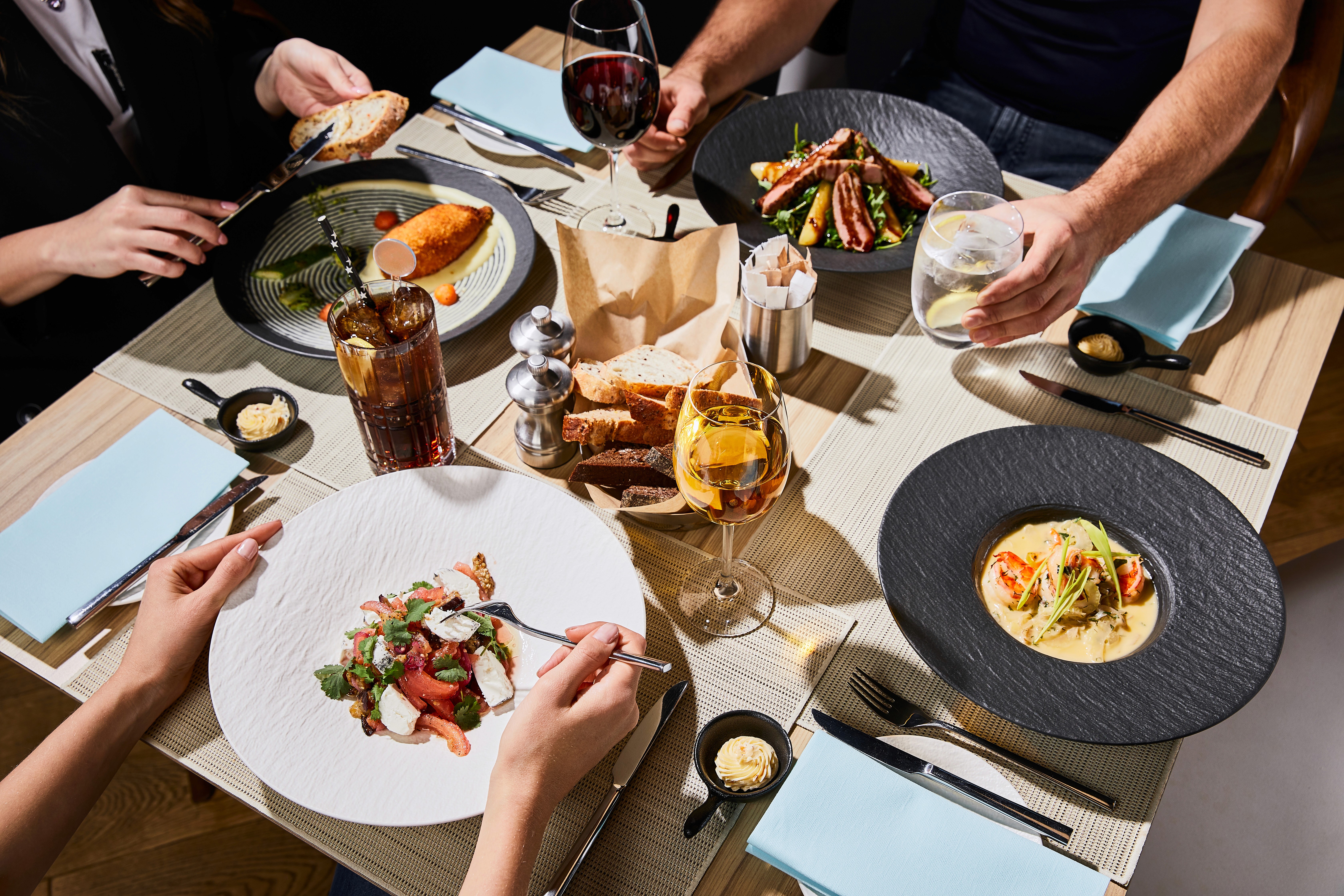
The single biggest factor in whether a curious browser becomes a booking is photography. Not the description, not the layout, not the clever copy. The pictures.
If your current website has stock images of food that is not yours, or photographs that do not do justice to what you actually cook, now is the moment to fix it. A few genuinely good photographs of your dishes, your space, and the kind of experience you create make the difference between "maybe" and "yes, let us book."
You do not need expensive professional photography for every dish. You need photographs that are honest, well-lit, and make someone hungry.
When someone lands on your site and decides they want to come, booking should take seconds. An online booking system, whether that is a dedicated reservation platform or a simple form that gets routed to your team, turns a moment of interest into an actual booking.
If the only way to book is to send an email and hope someone replies within the hour, you are losing bookings. During busy season, that friction becomes a filter that removes the people who were genuinely interested but not interested enough to chase you by phone.
You would be surprised how many restaurant websites make it hard to find basic information. What time do you open. Do you take bookings on Sundays. Are you closed on Mondays. Where exactly are you.
This information should be immediately visible. Not buried on a Contact page. Right there on the front of the site so someone knows instantly whether you are open when they want to visit.
When someone in Glasgow is looking for somewhere to eat, they search. "Italian restaurant Glasgow." "Best brunch West End." "Restaurant with outdoor seating Glasgow." If you are not showing up in those results, you are not in the conversation.
Local SEO for a restaurant means a few things working together. Your site needs to be built with structure that Google can read. Your copy needs to naturally include the terms people are searching for. Your Google Business Profile needs to be up to date and linked to your website. And your site needs to load quickly and work perfectly on a phone.
Getting all of this right now means you will already be visible when the busy season arrives.
What your Google Business Profile needs before the rush
Your Google Business Profile is doing a lot of work when people search for restaurants. It shows in the map results. It displays your phone number, address, and opening hours at a glance. It shows reviews and photos.
Before the busy season, make sure it is current. Update your opening hours if anything is changing. Upload fresh photographs of the food and the space. Add the links to make reservations if you have an online booking system. Respond quickly to any reviews, especially the recent ones.
A well-maintained Business Profile, working together with a well-built website, is what catches the customers who are actively searching right now.
The quiet season is the time to get this right
The season ahead is coming. The bookings will arrive. But you get to choose whether you are ready for them.
The restaurants in Glasgow that thrive are not just the ones with great kitchens. They are the ones whose websites work as hard as the people behind them. A site that is fast, clear, and easy to book through becomes part of your competitive advantage.
If your Glasgow restaurant website is not doing that work, if the menu is outdated, the photography is weak, the booking process is clunky, or you are barely visible on Google, now is the time to sort it.
If you are a Glasgow restaurant owner who wants to get this done properly, fill in the short form and I will be in touch within 24 hours.
I am looking for Glasgow restaurant and hospitality businesses that are serious about making the busy season count. If you want a website that does real work for you, let us have a conversation.
Spring is the moment Glasgow restaurants start thinking about the months ahead. Easter bookings are ticking in. The weather is improving. Tourists are arriving. Your kitchen is already bracing for the uptick.
But here is the thing most restaurant owners miss. When the busy season arrives, your website needs to be ready for it too. Because while you are managing staff, suppliers, and service, your site is working in the background. It is handling the first impression for every customer who discovers you before they pick up the phone.
If your website is not optimised for the busier months ahead, you are losing bookings that should be yours.
Why spring is when restaurant customers make their decisions
A lot of Glasgow dining happens on impulse. But the bookings that matter, the Saturday night plans, the special occasions, the groups deciding where to try something new, those tend to be made in advance. And spring is when people start thinking seriously about where they want to eat in the months ahead.
Someone is planning a birthday. A couple is looking for somewhere nice to take family visiting from out of town. A group of friends wants to book a table for a catch-up. They search for what they want, land on your site, and in those first few seconds, they make a decision about whether you are worth booking.
The restaurants that get those bookings are the ones whose websites are fast, clear, and make it obvious how to reserve a table.
The bottleneck: what happens when the phone starts ringing
Come May, June, and July, your phone will be busy. That is good. But here is the problem. If your website cannot be found on Google when someone searches for restaurant Glasgow, if the menu takes an age to load, if booking a table involves sending an email and waiting for a reply instead of doing it instantly, you are losing bookings to restaurants that have sorted these things.
Worse, you are creating work for yourself. Every inquiry that could have been a self-service online booking becomes a phone call or an email that takes your staff away from running the kitchen.
A website that works during the quiet season can become a liability during the busy one. It is worth sorting now, while you still have headspace.
What your restaurant website needs before the rush starts
Your menu is the single most important thing on your website. It is what potential customers are looking for. If it is a PDF, it is probably slow to load on mobile, hard to read, and invisible to Google. If it is built into your site as actual text, readable on any device and easy to update, it does the work properly.
When a customer is deciding whether to book, they need to know what you cook without friction. Not a thirty-second wait. Not squinting at a compressed PDF. Instant, clear, on any screen.
The single biggest factor in whether a curious browser becomes a booking is photography. Not the description, not the layout, not the clever copy. The pictures.
If your current website has stock images of food that is not yours, or photographs that do not do justice to what you actually cook, now is the moment to fix it. A few genuinely good photographs of your dishes, your space, and the kind of experience you create make the difference between "maybe" and "yes, let us book."
You do not need expensive professional photography for every dish. You need photographs that are honest, well-lit, and make someone hungry.
When someone lands on your site and decides they want to come, booking should take seconds. An online booking system, whether that is a dedicated reservation platform or a simple form that gets routed to your team, turns a moment of interest into an actual booking.
If the only way to book is to send an email and hope someone replies within the hour, you are losing bookings. During busy season, that friction becomes a filter that removes the people who were genuinely interested but not interested enough to chase you by phone.
You would be surprised how many restaurant websites make it hard to find basic information. What time do you open. Do you take bookings on Sundays. Are you closed on Mondays. Where exactly are you.
This information should be immediately visible. Not buried on a Contact page. Right there on the front of the site so someone knows instantly whether you are open when they want to visit.
When someone in Glasgow is looking for somewhere to eat, they search. "Italian restaurant Glasgow." "Best brunch West End." "Restaurant with outdoor seating Glasgow." If you are not showing up in those results, you are not in the conversation.
Local SEO for a restaurant means a few things working together. Your site needs to be built with structure that Google can read. Your copy needs to naturally include the terms people are searching for. Your Google Business Profile needs to be up to date and linked to your website. And your site needs to load quickly and work perfectly on a phone.
Getting all of this right now means you will already be visible when the busy season arrives.
What your Google Business Profile needs before the rush
Your Google Business Profile is doing a lot of work when people search for restaurants. It shows in the map results. It displays your phone number, address, and opening hours at a glance. It shows reviews and photos.
Before the busy season, make sure it is current. Update your opening hours if anything is changing. Upload fresh photographs of the food and the space. Add the links to make reservations if you have an online booking system. Respond quickly to any reviews, especially the recent ones.
A well-maintained Business Profile, working together with a well-built website, is what catches the customers who are actively searching right now.
The quiet season is the time to get this right
The season ahead is coming. The bookings will arrive. But you get to choose whether you are ready for them.
The restaurants in Glasgow that thrive are not just the ones with great kitchens. They are the ones whose websites work as hard as the people behind them. A site that is fast, clear, and easy to book through becomes part of your competitive advantage.
If your Glasgow restaurant website is not doing that work, if the menu is outdated, the photography is weak, the booking process is clunky, or you are barely visible on Google, now is the time to sort it.
If you are a Glasgow restaurant owner who wants to get this done properly, fill in the short form and I will be in touch within 24 hours.
I am looking for Glasgow restaurant and hospitality businesses that are serious about making the busy season count. If you want a website that does real work for you, let us have a conversation.